How RivetMonitor Works
RivetMonitor provides ongoing monitoring that tracks transaction performance, flags downgrades in real time, and shows whether your interchange optimization work is actually moving the needle.
RivetMonitor pulls reporting data from your upstream payment gateway into Rivet's system so that Rivet can analyze transaction performance over time and aggregate trends across processors, card types, entry methods, downgrade categories, and interchange outcomes.
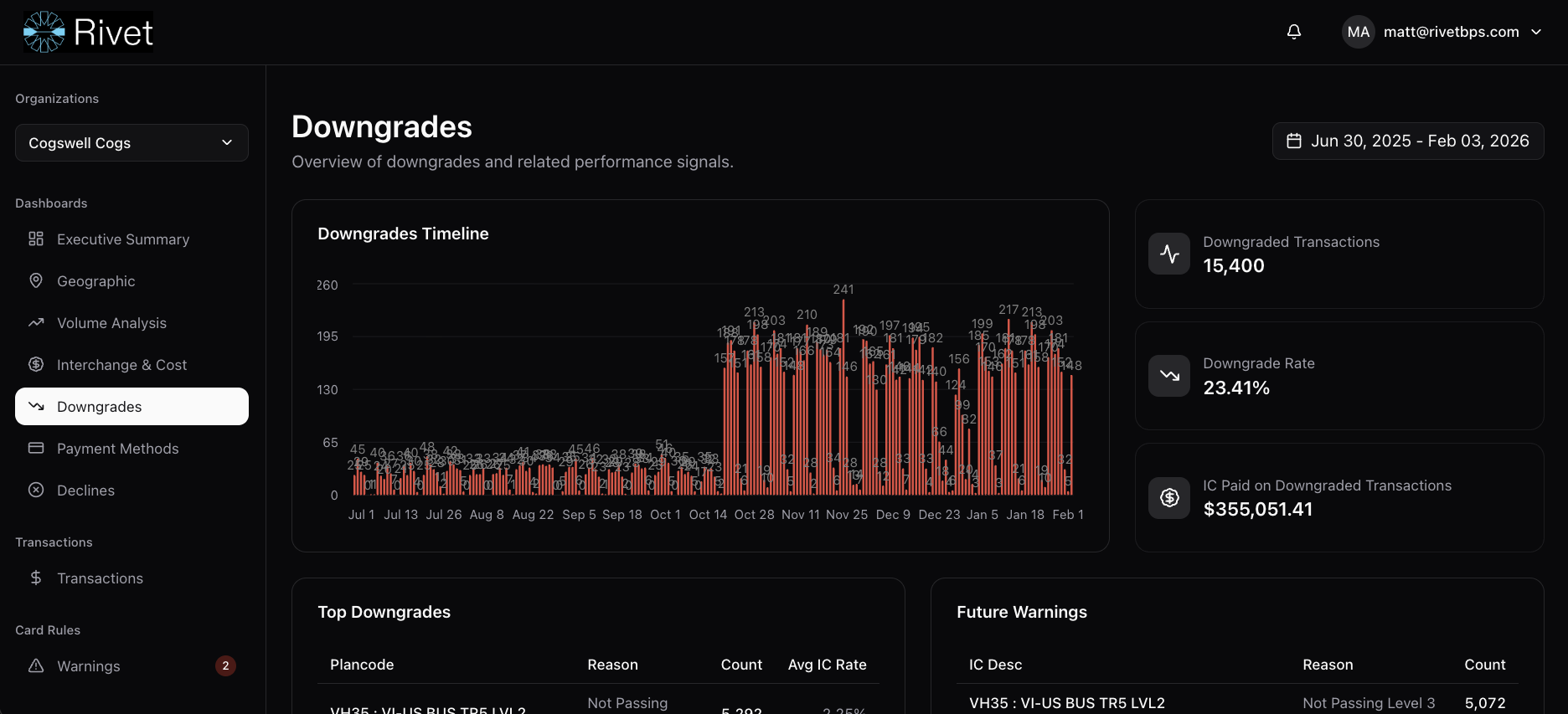
What RivetMonitor does
- Tracks transaction performance: monitors how transactions are clearing and how interchange outcomes change over time.
- Flags downgrades: identifies downgrade patterns so your team can see where processing costs are leaking.
- Measures optimization impact: shows whether changes made through RivetOptimize are improving transaction qualification and reducing avoidable interchange costs.
- Builds analytics: transforms gateway reporting data into reporting views that help your team understand performance by category.
- Creates aggregations: rolls transaction-level reporting into higher-level summaries for trend analysis and account review.
Data pulled from your gateway
RivetMonitor uses reporting data from your upstream payment gateway or processor portal. This is the operational data needed to monitor transaction quality, detect downgrade categories, and measure whether interchange optimization is improving results.
See what data RivetMonitor collects for the normalized transaction fields RivetMonitor can ingest.
PCI and PII handling
RivetMonitor is designed for transaction reporting and interchange analytics, not for storing full payment card numbers, CVV data, or personally identifying customer data.